
Viral Facebook Privacy Post Is a Hoax: Fact Check
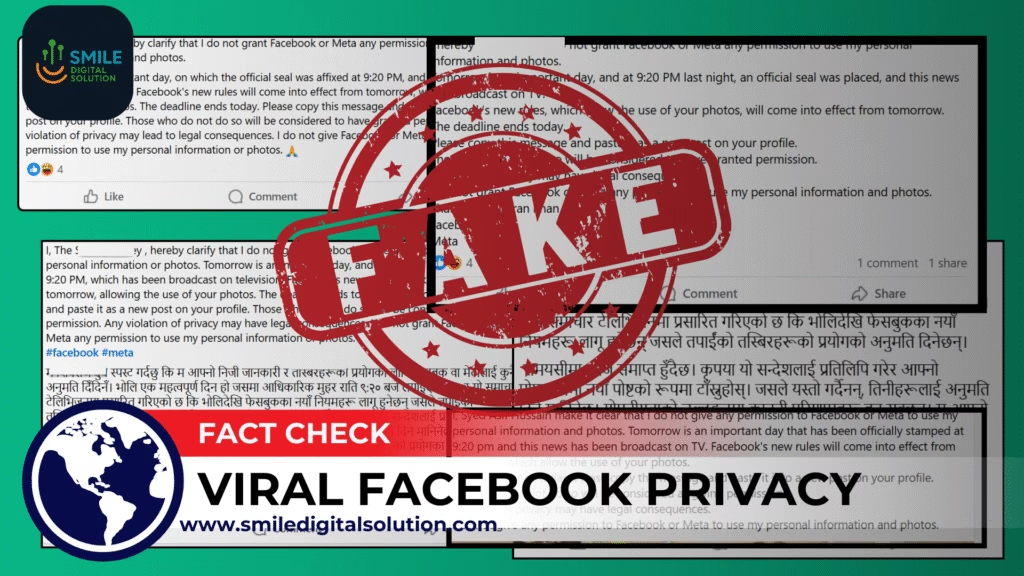

In recent times, a viral message has been circulating on Facebook that claims the social media giant, now operating under its parent company Meta, is instituting new rules allowing it to use users’ photos without their permission starting from a certain deadline. The message urges users to post a notice on their profiles to “deny permission,” warning that failure to do so will grant Meta free use of their personal photos and information, potentially leading to legal consequences. But is there any truth to this alarming claim? The short answer is: No. This is a widely spread fake news, and understanding why can help protect you from falling prey to misinformation.
The Viral Message Explained
The text going around reads something like this:
“I am …., hereby clarify that I do not grant Facebook or Meta any permission to use my personal information and photos. Tomorrow is an important day, on which the official seal was affixed at 9:20 PM, and this news has been broadcast on TV. Facebook’s new rules will come into effect from tomorrow, which will allow the use of your photos. The deadline ends today. Please copy this message and paste it into a new post on your profile. Those who do not do so will be considered to have granted permission. Any violation of privacy may lead to legal consequences.”
This message warns users to copy and paste it, as though the act of posting it would protect their privacy or override existing agreements.

Why This Message is False?
- No Such New Rule or Deadline Exists
Facebook and Meta regularly update their Terms of Service and Privacy Policies, but they do not impose sudden, enforceable deadlines on users to accept or deny use of their photos by copying and pasting a post. Official policy updates are communicated through proper channels, including notifications within the app and on their official sites. There is no record of any recent “official seal” or TV broadcast backing this claim. In fact, fact-checking sites and media outlets have repeatedly debunked this as a copypasta rumor that re-emerges periodically.
- Posting a Notice Does Not Change Agreements
When users sign up for Facebook or Meta services, they agree to the company’s Terms of Service and Privacy Policies, which grant Meta a license to use content posted on its platforms within the bounds of those agreements. Posting a personal legal notice or copy-pasting viral text does not override these agreements or change the legal framework under which your data is managed. This notion has been confirmed by multiple fact-checking organizations and legal experts.
- Meta’s Privacy Policy & User Control
Meta’s Privacy Policy is transparent about how user data, including photos, may be used. It allows Meta to use posted content for various purposes, including displaying on services or for internal analysis. However, Meta does not suddenly gain new rights without user consent or proper notifications. Importantly, users retain control over their data via privacy settings, and updates usually offer opportunities to review or adjust these settings.
- Use of Photos for AI and Other Features
Meta has introduced features involving AI, such as analyzing photos uploaded or stored to suggest creative content ideas. This requires user permission through explicit opt-ins within the app settings. Such features are opt-in, and users can disable them at any time. This is unrelated to the viral rumor about blanket permission revocation unless users agree to specific AI terms.
What Is the Origin of This Hoax?
This type of message has been circulating since 2012, often resurfacing with slight variations. It’s known as a “copypasta”—a block of text copied and pasted repeatedly across social media platforms.
The latest version includes references to Meta AI, legal threats, and a supposed deadline. These additions are designed to instill panic and encourage users to share the post without verifying its authenticity.
This isn’t a 2025 phenomenon—it’s an old trick that’s been fooling users for over a decade. The earliest versions trace back to 2012, shortly after Facebook’s IPO, when fears about data ownership spiked. Snopes first fact-checked a similar claim in September 2012, rating it false and explaining that users’ rights are governed by terms they accepted upon joining.
The hoax has evolved, incorporating current events like Meta’s rebranding in 2021 or AI advancements in 2023-2024, where users worried about photos being used to train models. In March 2024, a variant claimed the rule was “even on TV,” referencing nonexistent broadcasts. By May 2024, it included anti-Metaverse jabs, like “Goodbye Metaverse, it’s been a Nightmare,” tying into broader skepticism about virtual reality.
Why does it keep coming back? Social media algorithms reward engagement, and fear-driven posts get shared widely. Meta noted in a 2019 statement: “Copy-and-paste memes—those blocks of text posted on message boards, forwarded in emails and shared via social media—are as old as the internet.” It’s a classic example of misinformation thriving on urgency and FOMO (fear of missing out).
Related hoaxes include the “Facebook charging $4.99/month” rumor, debunked by Snopes in 2023, where users posted denials of permission to be billed. Or the “60 Minutes” advisory myth in 2025, falsely claiming the TV show urged users to post notices against data use. These patterns show how hoaxes adapt to exploit timely concerns.

Why These Hoaxes Are Dangerous??
While seemingly harmless, these viral posts can:
- Spread misinformation and create unnecessary panic.
- Expose users to scams by encouraging them to interact with fake legal notices.
- Distract from real privacy concerns, such as data tracking and targeted advertising.
Cybersecurity experts warn that reposting such messages can make users targets for phishing attacks and identity theft.
Tips to Spot and Avoid Social Media Hoaxes
In a digital age where misinformation spreads fast, here’s how to stay vigilant:
- Check Sources: If it claims “broadcast on TV” or “attorney advised,” verify with reputable sites like Snopes, FactCheck.org, or Reuters.
- Look for Urgency: Hoaxes often use deadlines like “tomorrow” to prompt action without thinking.
- Search the Text: Copy-paste the message into Google to see if it’s a known copypasta.
- Consult Official Channels: Visit Meta’s Help Center or blog for policy updates.
- Think Logically: Legal agreements aren’t undone by social posts; they’d require court action.
ProPublica reported in 2025 that Meta has reduced fact-checking efforts while boosting viral content, which may explain why such hoaxes persist. Always cross-reference multiple sources.
Conclusion: Don’t Fall for the Trap—Educate and Share Facts
The Facebook privacy hoax about denying permission for photo use is nothing more than recycled misinformation designed to exploit fears. As we’ve seen through quotes from Meta and fact-checks from Snopes and Forbes, posting these messages changes nothing. Instead, focus on real privacy tools and stay informed. By understanding these tactics, you can help curb the spread of fake news on social media.
If you’ve seen this rumor, share this article instead—it’s the best way to fight back. For more tech news, fact-checks, and privacy tips, subscribe to us. Remember, knowledge is your best defense in the digital world.
Last updated on August 12, 2025 at 5:53 am


